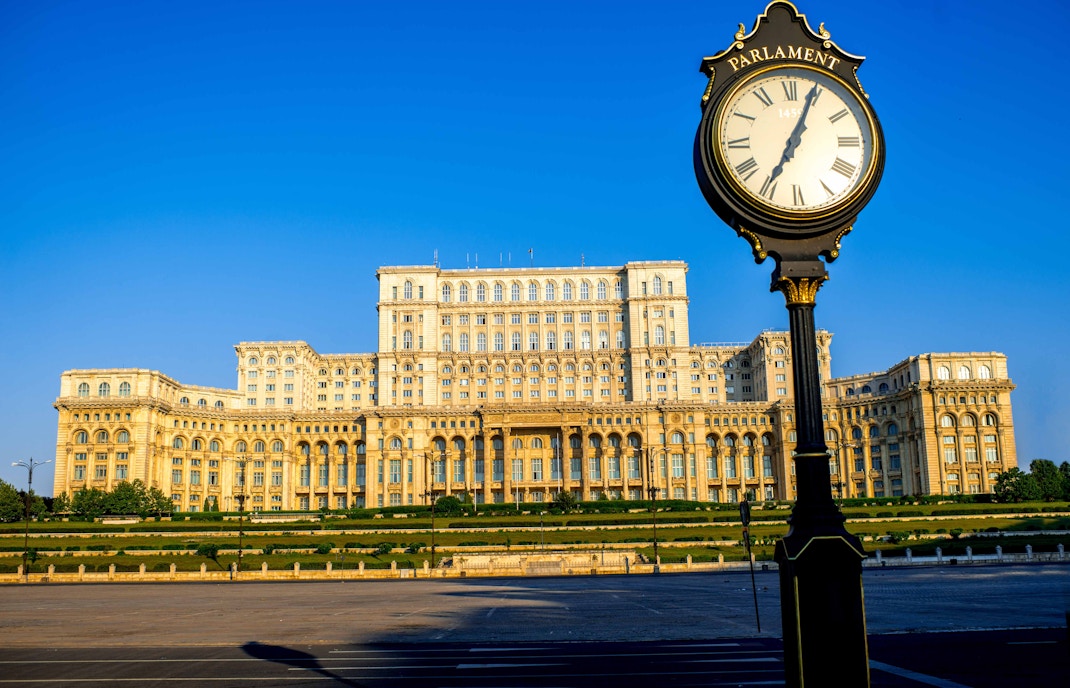
The Palace of Parliament is Bucharest’s vast communist-era landmark, best known for its outsized ceremonial halls, marble staircases, and political history. A visit is shorter than many people expect, but it feels formal: you’ll need valid ID, extra time for security, and enough energy for stairs. The main mistake is treating it like a walk-in museum when it runs more like a controlled government tour. This guide covers timing, tickets, entrances, pacing, and what to prioritize once you’re inside.
This is the section to read before you choose a time slot or ticket.
🎟️ Time slots for Palace of Parliament can sell out 1–3 days in advance during summer weekends and holiday periods. Lock in your visit before the time you want is gone. See ticket options
A winter weekday can still feel busy if visitor slots are reduced, while a summer afternoon can be smooth if Parliament activity is light. If you’re planning tightly, choose an earlier slot and leave buffer time in case the route or timing shifts on the day.
| Ticket type | What's included | Best for | Price from |
|---|---|---|---|
Bucharest: Palace of Parliament Entry Ticket & Guided Tour | Skip-the-line entry to the Palace of Parliament + official guide in English, Spanish, Italian, or Romanian + private tour option + Mercedes Benz minivan pick-up from city center as per option selected | A palace-only visit where you want reserved entry and the flexibility to choose language or upgrade to a private format | €25 |
Palace of Parliament Bucharest Skip-the-Line Tickets with Guided Tour | Skip-the-line ticket + official English-speaking tour guide | A focused 1-hour visit where you want the classic route with the least decision-making | €30 |
Palace of Parliament Bucharest Guided Tour with Skip-the-Line Tickets | 1-hour guided tour + skip-the-line entry + English or Italian-speaking guide | A first visit where you want commentary throughout and don’t want to figure out the route or historical context on your own | €780 |
Combo (Save 5%): Skip-the-Line Guided Tour of Palace of Parliament + Entry to Therme Bucuresti Spa Tickets | Palace skip-the-line guided tour + entry to Therme Bucuresti + 4.5-hour or 1-day access to The Palm or Elysium zone as per option selected | A Bucharest day that balances one heavy historical stop with a second experience you can actually unwind in afterward | €59.85 |
Bucharest: Private Palace of Parliament Guided Tour with Transfers | Entry to the Palace of Parliament + private tour + English-speaking guide + access to the Romanian Senate and Chamber of Deputies + Mercedes Benz minivan pick-up from city center | A more exclusive visit where you want transfers, a private pace, and access that feels less like a standard group departure | €630 |
Bucharest: Palace of Parliament, Ceaușescu Mansion & Village Museum Guided Tour with Transfers | Guided tour of Palace of Parliament + Ceaușescu Mansion + Village Museum + city-center pick-up and drop-off + AC minivan transfers | A wider communist-era and cultural overview where you want the Palace in context rather than as a standalone stop | €25 |

Era: 1980s
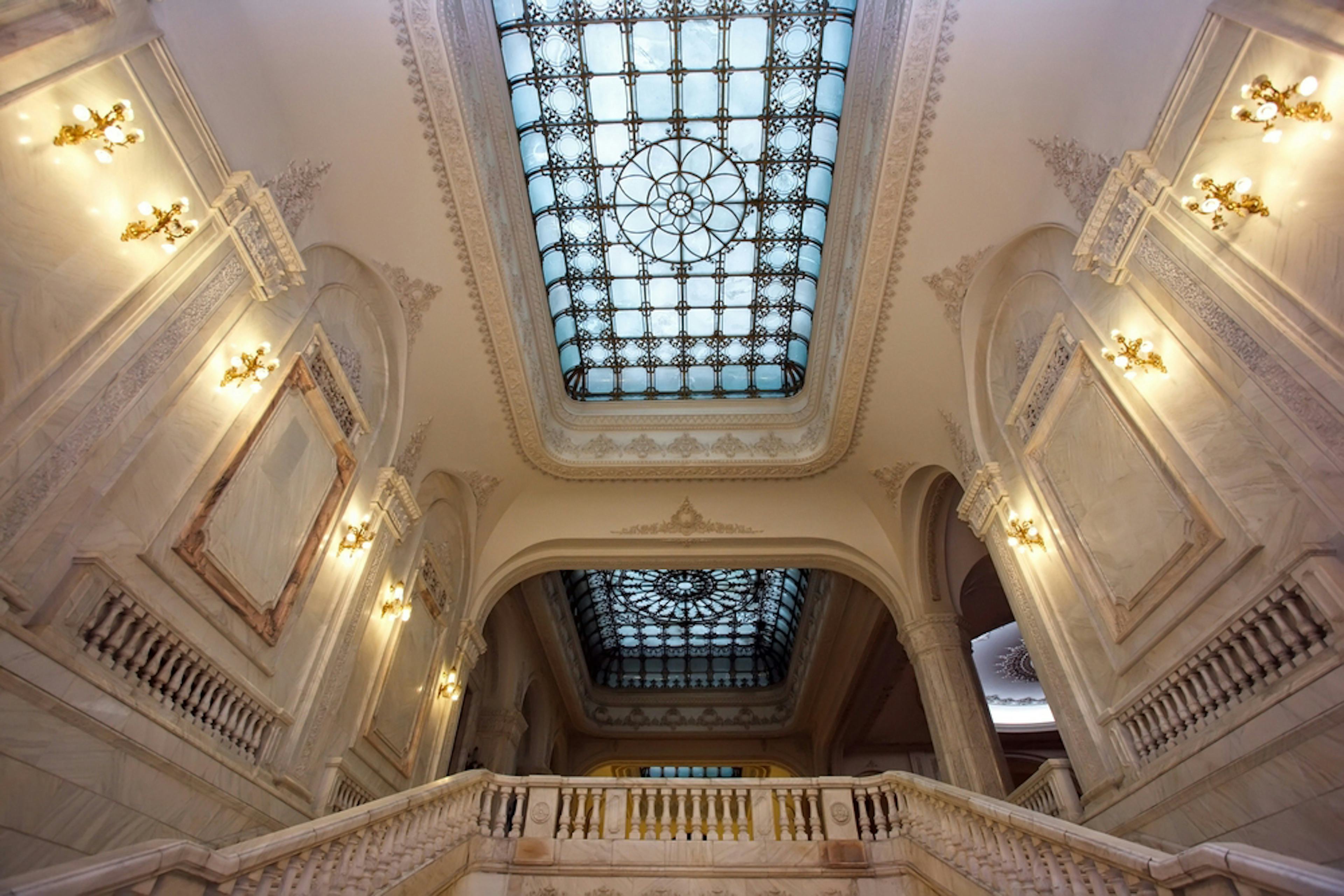
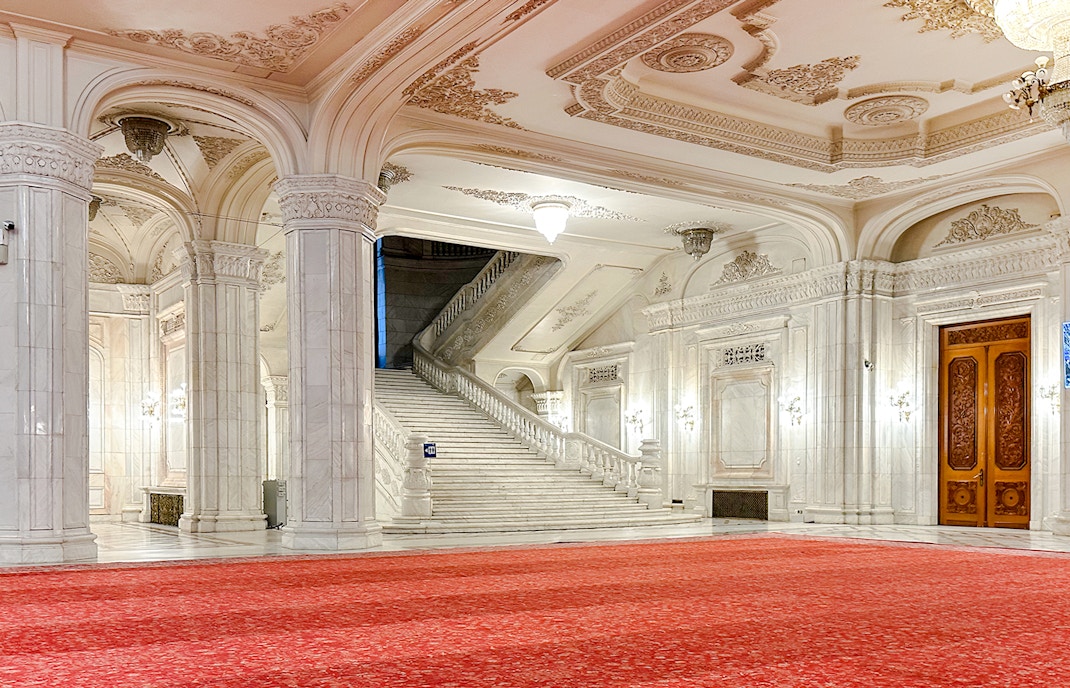
This is where the building’s scale stops being abstract and becomes physical. The staircase is intentionally broad and shallow, designed for ceremonial entrances rather than speed, and it sets the tone for everything that follows. Most visitors take a photo from the bottom and move on too fast; the better view is turning back halfway up to see how the hall frames the staircase behind you.
Where to find it: Early in the standard interior route, just beyond the first major ceremonial halls.
Era: Late communist period
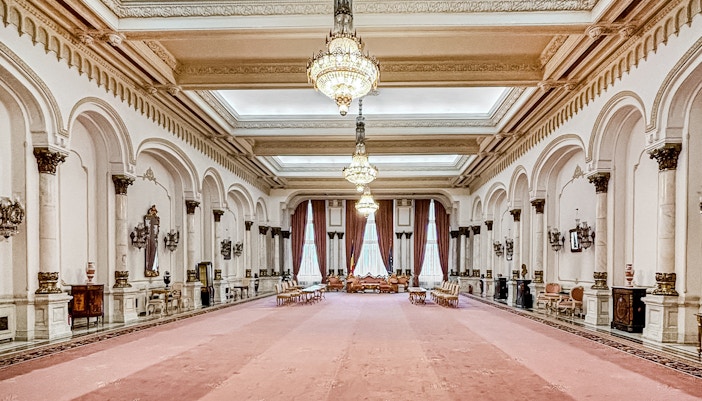
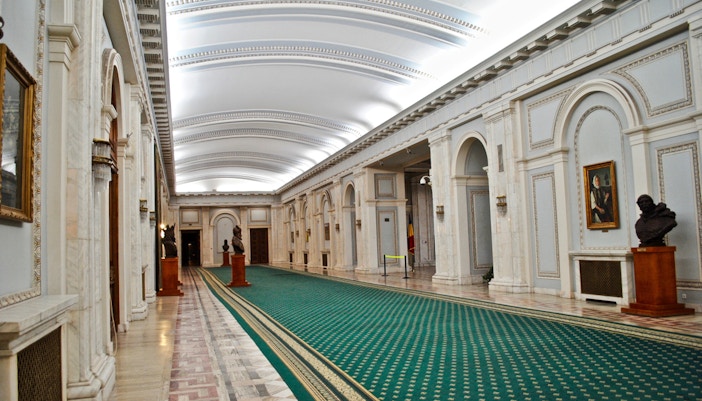
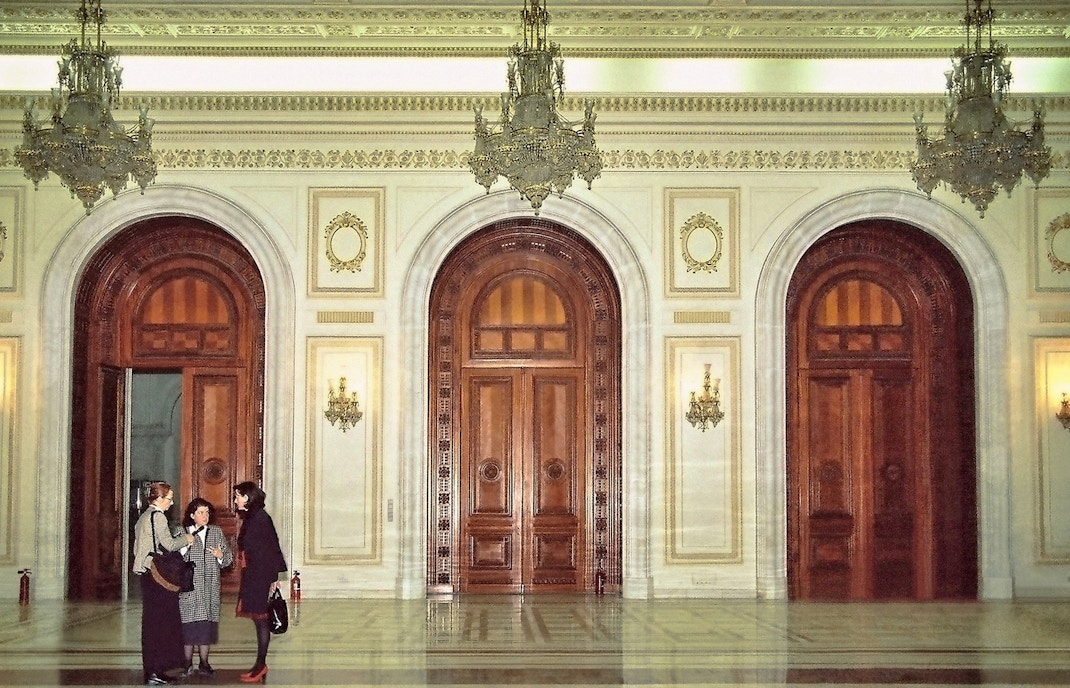
This is one of the most memorable ceremonial spaces on the route, and it tends to be the room that convinces visitors the palace is more than a political curiosity. The chandelier, scale, and decorative finish explain why the building still feels excessive decades later. What people often miss is how much of the drama comes from the proportions of the room itself, not just the lighting.
Where to find it: On the core guided route through the formal reception halls.
Era: 1980s state ceremonial hall
Union Hall is a strong example of the palace’s theatrical design — big enough to impress, formal enough to intimidate, and still clearly tied to its original political purpose. Guides often use this stop to explain how the building was meant to project authority. Many visitors remember the floor and chandeliers, but the ceiling mechanism and sheer vertical scale are what make the room distinctive.
Where to find it: Usually included among the principal halls on the standard guided route.
Attribute — Viewpoint: Formal façade balcony
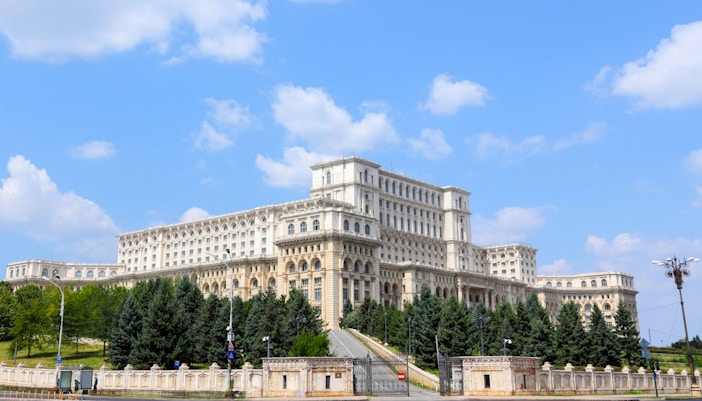
This is the stop nearly everyone waits for, and for good reason: it gives you the clearest sense of how Ceaușescu wanted the city to align around the building. The long boulevard view is the payoff, but the famous Michael Jackson mix-up is what many guides use to make the spot memorable. What people rush past is the transition to the balcony — some of the best staircase and hall perspectives come just before you step outside.
Where to find it: Near the façade side of the route, usually toward the latter part of the visit.
Attribute — Function: Working legislative space
If your route includes a chamber, this is where the palace stops feeling like pure spectacle and starts reading as a working state building. The seating layout, emblems, and formal arrangement make the political purpose more concrete than the grand halls do. Visitors often focus on whether it’s lavish enough; the more interesting detail is how much communist-era symbolism still sits inside a democratic institution.
Where to find it: Access varies by day and operational needs, but it appears on some guided routes beyond the main reception halls.
Attribute — Access level: Extended add-on route when available
This is the sharpest contrast in the building: above ground, velvet and chandeliers; below ground, concrete, infrastructure, and cold-war logic. It changes the tone of the visit from ceremonial to practical, which is why history-focused travelers tend to rate it highly when it’s open. Most people only think of the palace as a showpiece, so they miss how much paranoia and engineering sit beneath it.
Where to find it: On special extended routes descending below the standard visitor circuit.
This works best for older children who can handle a formal 1-hour guided visit, long security procedures, and a lot of standing without expecting hands-on exhibits.
Yes, if your trip is short and you want easy access to central Bucharest without complicated transport. The palace itself is not in the prettiest part of the city to stay for atmosphere, but the wider Izvor–Unirii–Old Town zone is walkable enough to make it convenient. If you care more about nightlife or café culture than government landmarks, stay a little farther east.
Most visits take about 1.5–2 hours in total, even though the guided route itself is usually around 1 hour. The extra time goes to document checks, airport-style security, and the walk from the outer checkpoint to the meeting or validation area inside the complex.
Yes, booking ahead is the safer move, especially for summer weekends and holiday periods. Visitor access is controlled, tour capacity is limited, and official Parliament business can reduce the number of available slots on short notice, which makes same-day plans less reliable than at a regular museum.
Yes, but only if you understand what it saves you. Skip-the-line options mainly help with the ticketing and reservation side; they do not bypass passport control or airport-style security, so you still need to arrive early and budget time for checks.
Arrive 15–25 minutes before your scheduled visit. That buffer matters because you’ll need ID verification and security screening, and late arrivals can be refused entry even if you already have a confirmed booking.
Yes, but keep it small and uncomplicated. Large bags, suitcases, oversized luggage, and restricted items like sharp objects or flammable products can stop you at security, and this is one attraction where packing light genuinely makes the entry process faster.
Yes, you should bring your original passport or valid EU national ID. Driver’s licenses, photocopies, and phone images are commonly refused, and if your document does not meet entry rules, you can be denied access with no refund.
Usually yes, in the main visitor halls, but the rules are not identical everywhere. Flash, tripods, selfie sticks, filming equipment, or commercial-style setups can be restricted, and if your guide flags a no-photo or limited-photo area, follow that instruction rather than assuming the whole route works the same way.
Yes, and the building is actually set up more naturally for guided groups than for independent wandering. Standard visits already run as escorted routes, and private tours are a better fit if your group wants a smoother pace, transfers, or more focused commentary.
Yes, but it suits older children better than very young ones. The visit is formal, guided, and stair-heavy, so families tend to enjoy it most when children are old enough to handle 1 hour of standing, security procedures, and a history-based experience rather than hands-on exhibits.
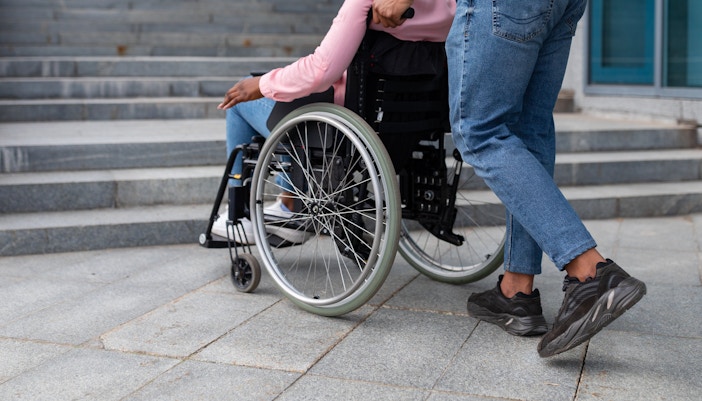
No, not in a reliably visitor-friendly way for the standard tour. Several routes involve around 200 steps, elevator access is limited or unavailable on common visitor circuits, and the long security approach adds another layer of difficulty for anyone with reduced mobility.
Yes, but nearby options are a better bet than relying on the building itself. There can be a coffee-shop-style stop inside the complex for some tours, but for a proper meal you’re better off eating before your slot or heading afterward toward Izvor, Unirii, or Old Town.
Your route, timing, or even the day’s availability can change if official Parliament business takes priority. That’s why it’s smart to avoid planning another rigid timed activity immediately afterward, especially if you’re visiting on a busy weekday or during a politically active period.


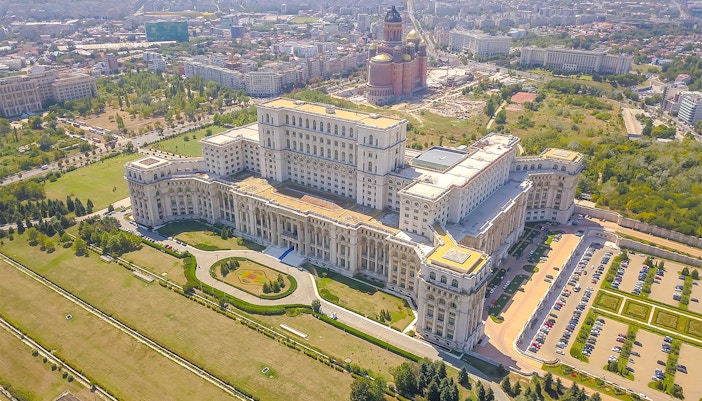
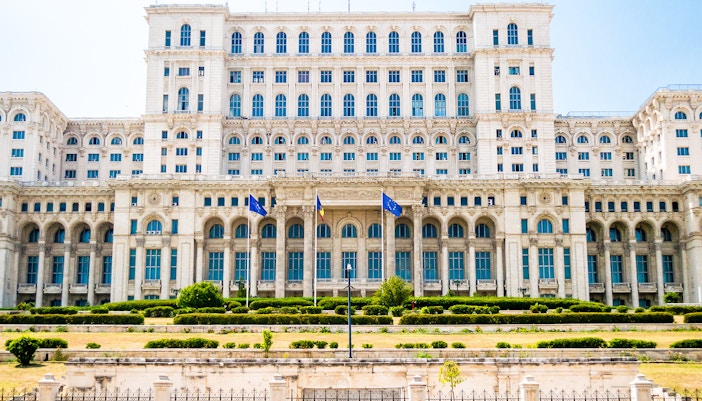
The palace sits on Arsenal Hill, south-west of Bucharest’s Old Town, about 2km from the historic center and easiest to reach by metro plus a short taxi or rideshare on timed-entry days.
Strada Izvor 2–4, Bucharest, Romania

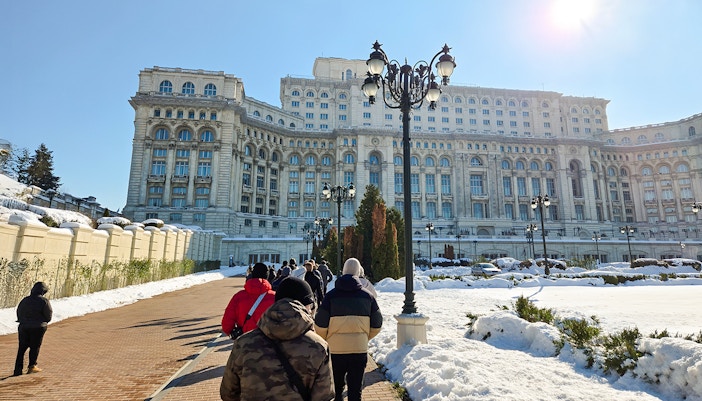
Most visitors enter through the Senate side, and the common mistake is heading to the main façade for photos first and then realizing their meeting point is elsewhere.

When is it busiest? Saturdays and Sundays from 11am–2pm, plus July and August, are the hardest times to visit because group tours bunch together and security lines move slower.
When should you actually go? The first weekday tour or a later afternoon weekday slot is usually easier, because there’s less pressure at document check and fewer large groups moving through the same halls.

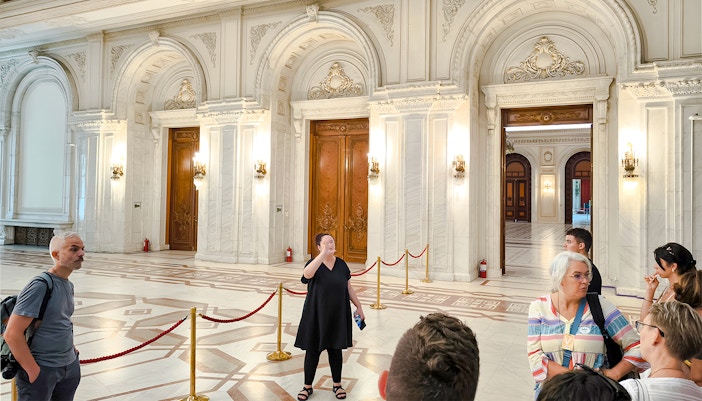
This is best explored on a fixed guided route rather than freestyle wandering, and most visits cover only a small part of the building in about 1 hour. The main ceremonial spaces sit beyond security and unfold in sequence, so orientation matters less than staying alert for details as you move.
Suggested route: Let the staircase slow you down early, look up in every major hall before you move on, and save your photo energy for the balcony near the end — most visitors rush there and then realize they barely noticed the rooms that explain why the building matters.

💡 Pro tip: Have your passport and booking open before you reach the outer checkpoint — once you’re through the first gate, it’s still a long walk to validation, and small delays there can make a timed group feel rushed.
Get the Palace of Parliament map / audio guide


Personal photography is generally possible in the main visitor halls, but rules can vary by route and staff instructions on the day. Flash, tripods, selfie sticks, filming gear, and commercial shoots can be restricted or treated differently from standard phone or camera use. If your route includes spaces with tighter rules, follow the guide rather than assuming the same policy applies everywhere.


Distance: 6km — about 20 min by car
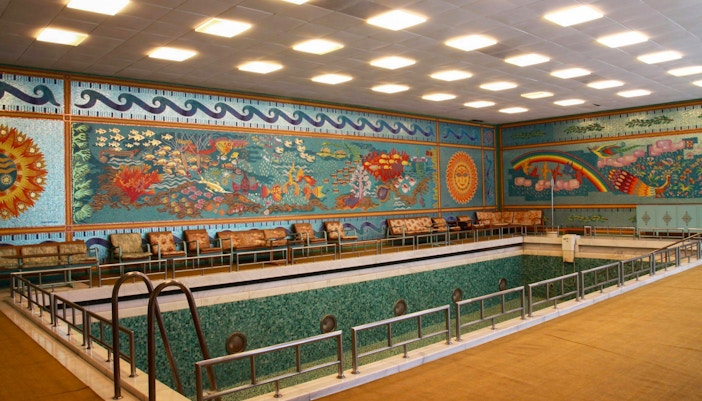
Why people combine them: It turns the palace from a standalone curiosity into a fuller communist-era story by pairing official power with Ceaușescu’s private life.
✨ Palace of Parliament and Ceaușescu Mansion are commonly visited together — and simplest to do on one guided combo with transfers between both sites. It saves you from coordinating timed entry, transport, and historical context separately. → See combo options

Distance: 7km — about 20–25 min by car
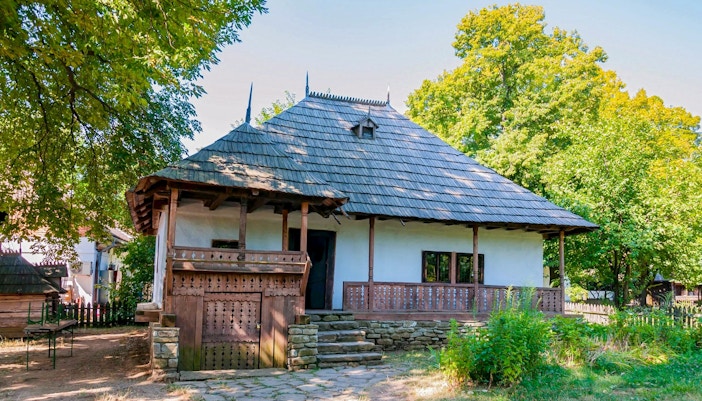
Why people combine them: The contrast works brilliantly: one stop shows state grandeur and political control, while the other shows traditional Romanian homes, churches, and rural life.

Izvor Park
Distance: 500m — about 7 min walk
Worth knowing: It’s the easiest place to step back and get the full front-facing palace view without another ticket or another queue.
National Museum of Contemporary Art (MNAC)
Distance: On site — separate entrance at the palace complex
Worth knowing: This is the most interesting follow-up if you want to see how a communist monument has been reused for contemporary culture.